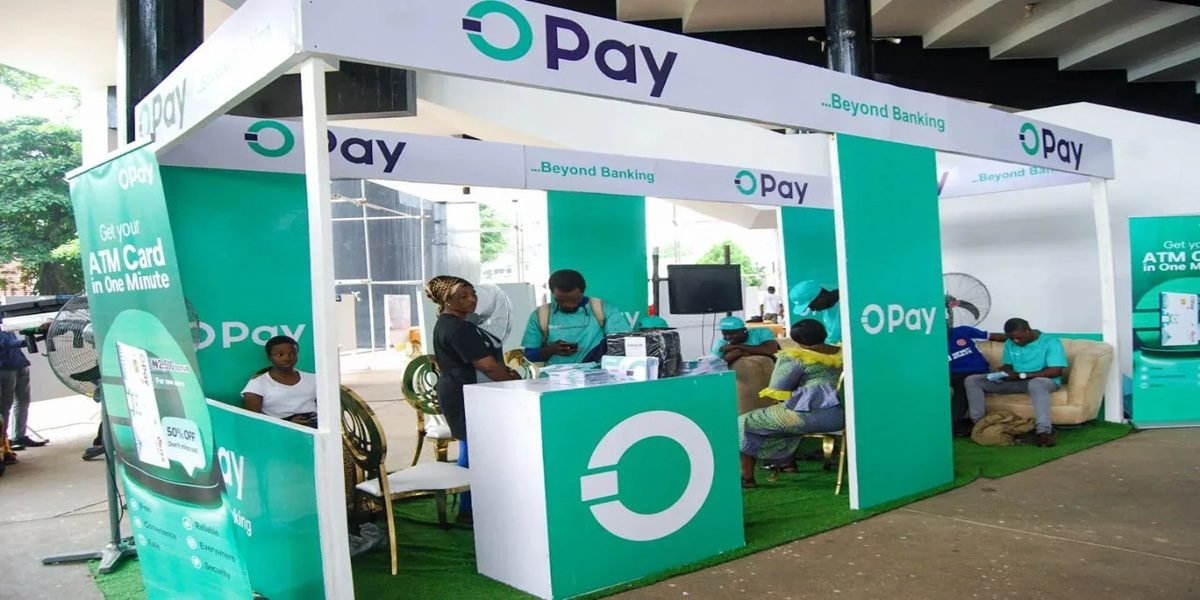
Police catch a 27 year old woman, Hafsat Abubakar, for making and sharing a fake letter claiming OPay was closing down.
Police officers from the cybercrime branch have arrested a 27 year old woman named Hafsat Abubakar for creating and sharing a fake letter claiming that OPay was shutting down its operations.
The official public update about the arrest was given by police leaders on Wednesday, September 9, 2026. The news brings relief to millions of small traders, food sellers, and everyday citizens who rely on the mobile app to send and receive money daily across the country.
The police operation took place in Abuja after cyber officers used digital tracking tools to follow the online path of the fake message.
Detectives traced the forged letter directly to a social media account on the X platform registered under the username @haifah_er_abba.
Operatives from the National Cybercrime Centre arrested the suspect, who graduated from Ahmadu Bello University in Zaria, on Friday, September 4, 2026, to face investigation for causing public fear.
The main reason why the financial company called the police to arrest the suspect is that the fake letter caused panic among market women, shop owners, and bike riders who thought their saved money would get trapped.
The forged paper, titled Official Note, claimed that the company would stop processing transactions and close account services indefinitely from Tuesday, September 1, 2026.
This lie made many customers rush to move their cash out of fear, threatening to harm the company’s good name and cause big financial problems across local markets.
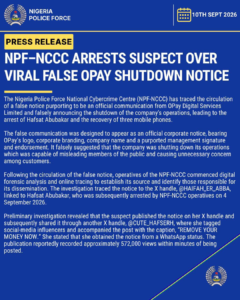
When the fake letter started spreading online, company managers quickly checked the document and saw clear mistakes, such as an old company logo, wrong spelling of the brand name, and a bad letter arrangement.
Company leaders immediately sent an official request to police bosses on Monday, August 31, 2026, asking cyber detectives to catch whoever typed and posted the false document.
The police warned the public that sharing fake financial news on the internet is a big crime that carries serious punishment under national laws.
See Also: Apple Launches First Bending iPhone Duo and New Tech Products at Surprise and Shine Event
Explaining how police detectives tracked down the creator of the false letter during the press conference, Force Public Relations Officer Anietie Iniedu stated, “On the 31st of August 2026, the Nigeria Police Force National Cybercrime Centre, NCCC, received a formal petition from OPAY Digital Services Limited through the office of the Deputy Inspector General of Police in charge of the Force Criminal Investigation Department, Abuja, requesting urgent investigation, tracing and apprehension of those responsible for creating and circulating the fraudulent document.”
Sharing details on how digital tools pinpointed the suspect, he added, “Upon receipt of the approved petition, the Nigeria Police Force National Cybercrime Centre, NCCC, deployed digital forensic tools to analyse the content, which was traced to a post on the X handle, @haifah_er_abba, registered and operated by one Hafsat Abubakar.”
Dismissing the false letter, OPay Head of Corporate Communications Folayemi Joshua reassured customers that the claim was “completely false” and confirmed that the financial platform remains fully open for business.
This quick police action sends a strong warning to people who create fake news on the internet to cause panic among banking customers.
Everyday users and small business owners can now send and receive their money with peace of mind, knowing that the mobile financial service remains safe, open, and fully operational across all cities and villages.