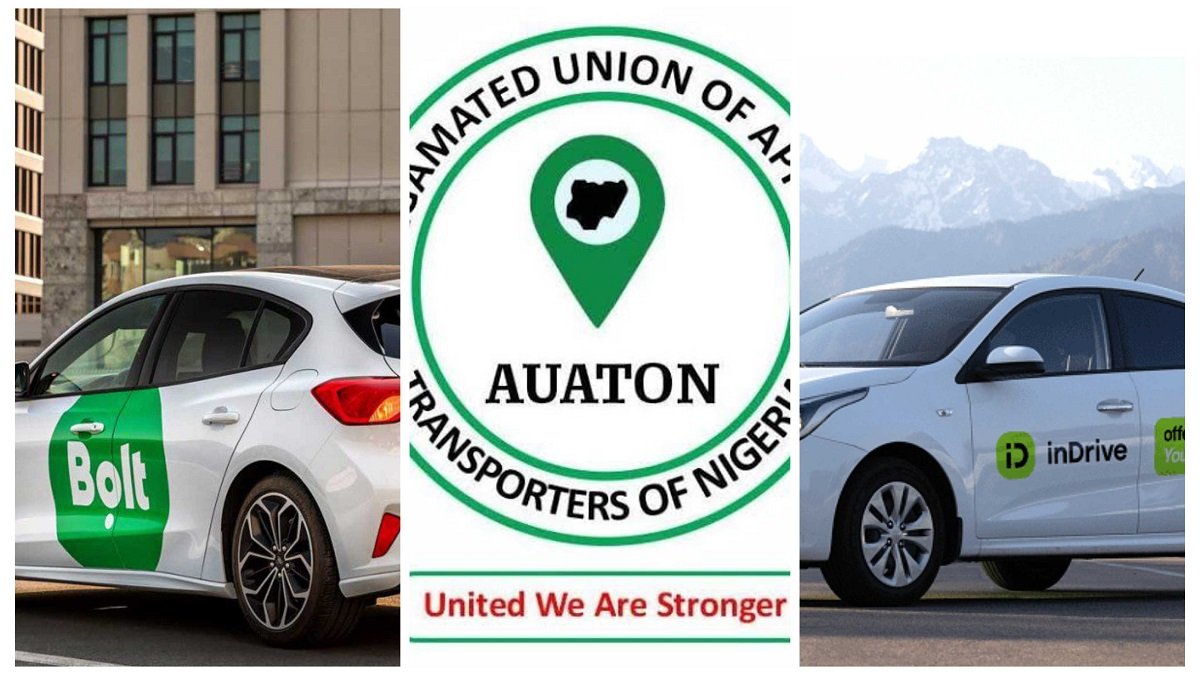
App based drivers in Lagos begin an indefinite strike against Bolt and inDrive to demand better fares and lower app commissions.
App based commercial drivers under the Amalgamated Union of App Based Transporters of Nigeria(AUATON) have officially begun an indefinite strike across Lagos.
The nationwide strike action took effect on October 12, 2026, forcing thousands of passengers to face long waiting times and few available rides across major city roads.
Under this strike action, thousands of registered e-hailing drivers have turned off their driver applications on major ride-hailing platforms, specifically targeting Bolt and inDrive.
The unionized drivers are demanding an immediate increase in trip fares to match the high cost of petrol and car spare parts. In addition, the transport union wants app companies to reduce the commission money they take from each ride to ten percent or less.
Drivers are also asking for an immediate stop to sudden account blocks, demanding fair hearings whenever app companies receive complaints from passengers.
This driver protest is very important for everyday commuters, office workers, and small traders who rely on ride-hailing apps for daily movement across Lagos.
With fuel prices remaining high, drivers explain that current trip fares no longer cover daily vehicle maintenance, fuel expenses, and food for their families.
When drivers carry passengers on cheap fares while paying high app commissions, they end up taking home almost nothing after a long day of work.
At the same time, when drivers switch off their phones, everyday citizens struggle to find rides to work, hospitals, and markets.
Explaining why drivers decided to park their vehicles and shut down their phone apps, union leaders and protesting workers spoke openly about their daily struggles on the road.
See Also: Dangote Petroleum Refinery Extends Share Sale by 10 Days for African Investors
Speaking on behalf of struggling drivers who feel ignored by app operators, union representatives emphasized that “it said the planned protest and industrial action should not be seen merely as an attempt to introduce alternative ride-hailing applications, but as a response to what it described as persistent challenges affecting drivers’ earnings, working conditions and livelihoods”.
Showing how desperate the situation has become for families who depend on daily driving income, angry drivers urged app owners to listen to their demands or leave the market.
Demanding fair treatment from foreign app companies, protesting drivers stated that “drivers are the backbone of your business. Without drivers, there is no platform. We are open to dialogue, but we are no longer willing to suffer in silence”.
Bolt has already called for peaceful talks to discuss driver welfare and trip charges. As the strike continues across Lagos, commuters and drivers are watching to see if app companies will increase trip prices and lower commission fees to bring cars back to the road.